Louis Vuitton Monterey Returns In Ceramic
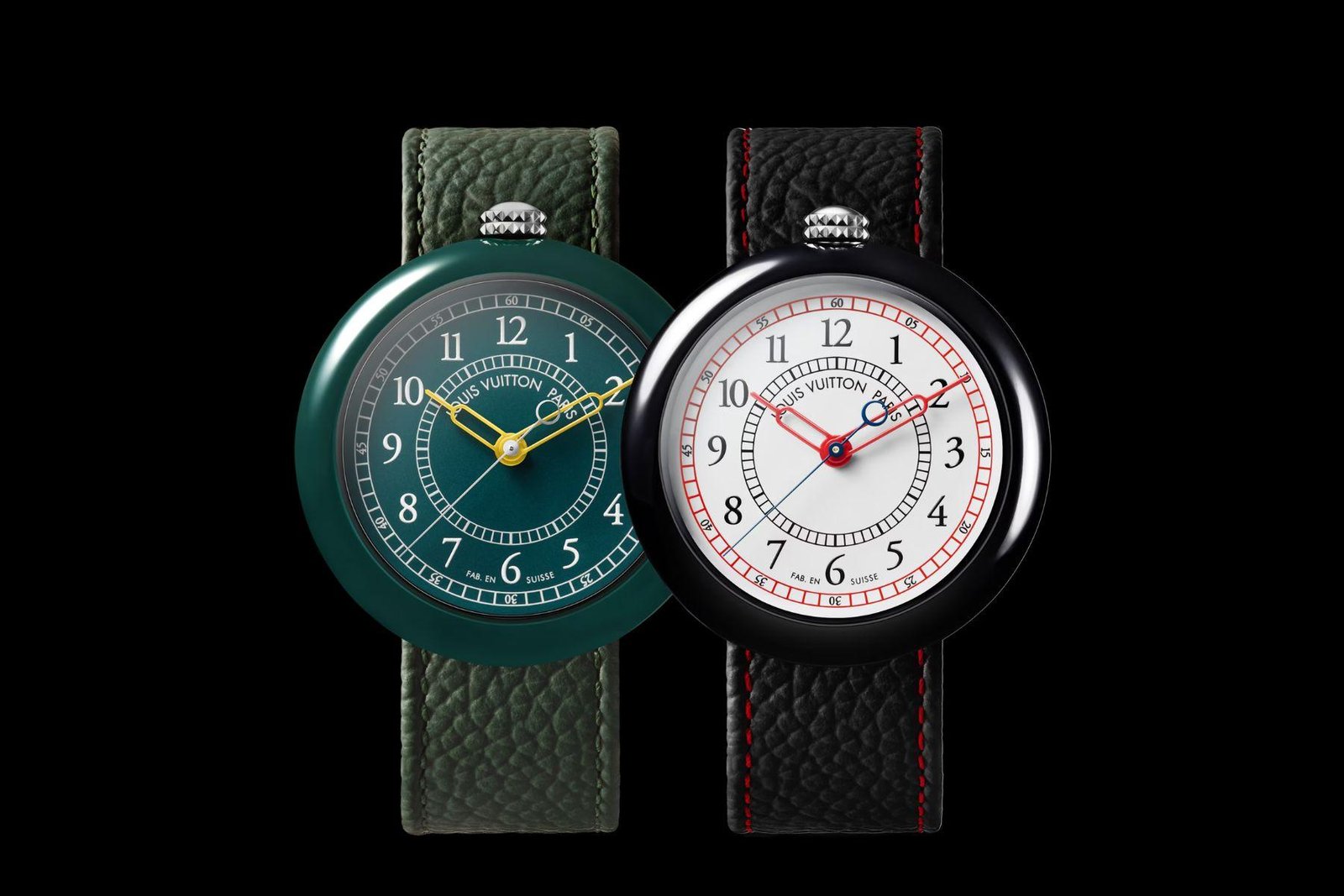
The iconic 1988 design returns in glossy black and green ceramic, combining one of Louis Vuitton’s earliest watchmaking signatures with modern automatic mechanics.
The Louis Vuitton Monterey occupies an unusual place in the history of the maison’s watchmaking. Long before the Tambour arrived in 2002, Louis Vuitton had already entered the world of watches with the Montre LV I and LV II in 1988. Designed by Italian architect and industrial designer Gae Aulenti, the two models introduced a distinctive pebble-shaped, lug-less case and a crown positioned at 12 o’clock.
The smaller LV II was particularly notable for its use of ceramic. At a time when the material was still relatively uncommon in watchmaking, the watch was offered with either a black or green ceramic case. The design was developed in collaboration with IWC, whose ceramic expertise had already been demonstrated in the 1980s. The original watches were quartz-powered and reflected Louis Vuitton’s longstanding connection with travel and functional design.
The Monterey name itself came from a playful misunderstanding. The French word montre, meaning watch, was reportedly pronounced as “Monterey” by an American client, giving the design the name that would eventually become associated with this early chapter of Louis Vuitton watchmaking.
A Familiar Shape, Reinterpreted
The latest Louis Vuitton Monterey Ceramic returns directly to the proportions and character of the LV II. At 37mm in diameter, the new model maintains the dimensions of the 1988 watch, while its 11mm thickness reflects the presence of a modern automatic movement.
The case remains immediately recognisable. There are no conventional lugs interrupting the smooth outline, while the crown remains positioned at noon. For the new generation, however, the crown has been enlarged and finished with a Clous de Paris pattern, adding texture to an otherwise highly sculptural profile.
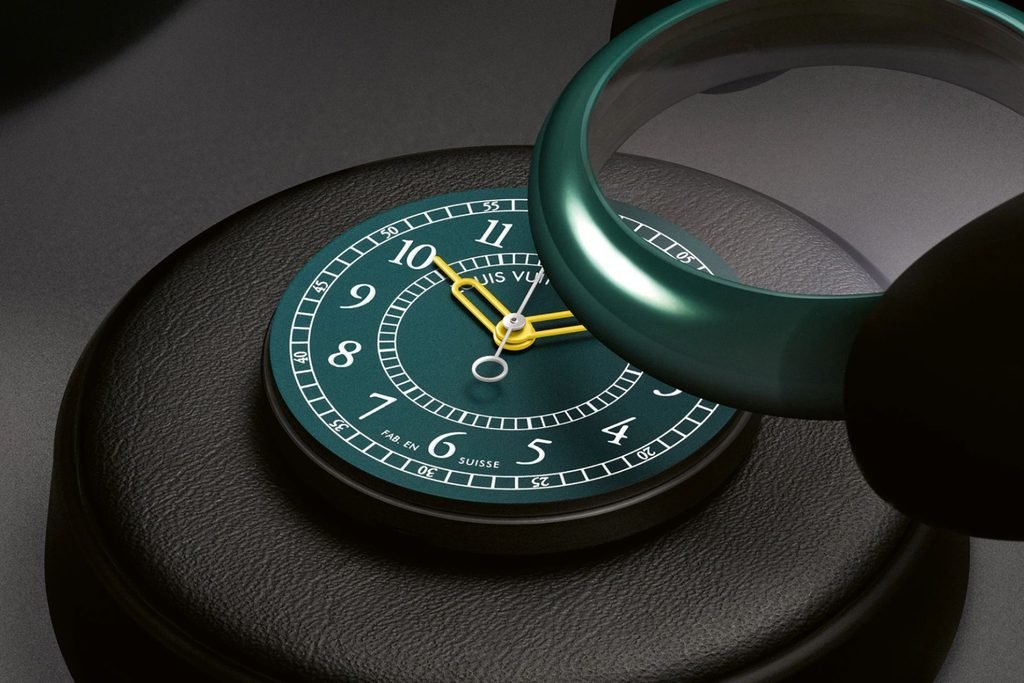
The case is produced in glossy ceramic, offered in either black or green. Rather than relying solely on a moulded construction, Louis Vuitton uses ceramic powder, zirconium oxide and pigments compressed into a solid block. The material is then machined into the characteristic pebble shape before being fired at around 1,000°C. Once the desired colour and hardness have been achieved, the case is ground and finally polished by hand.
This process is particularly important for the Monterey because the case itself is the defining element of the design. Its rounded surfaces and uninterrupted silhouette leave little room for conventional finishing shortcuts, making the final hand-polishing stage essential to the appearance of the watch.
Two Colourways, One Design Language
Louis Vuitton offers the Monterey Ceramic in two distinct configurations.
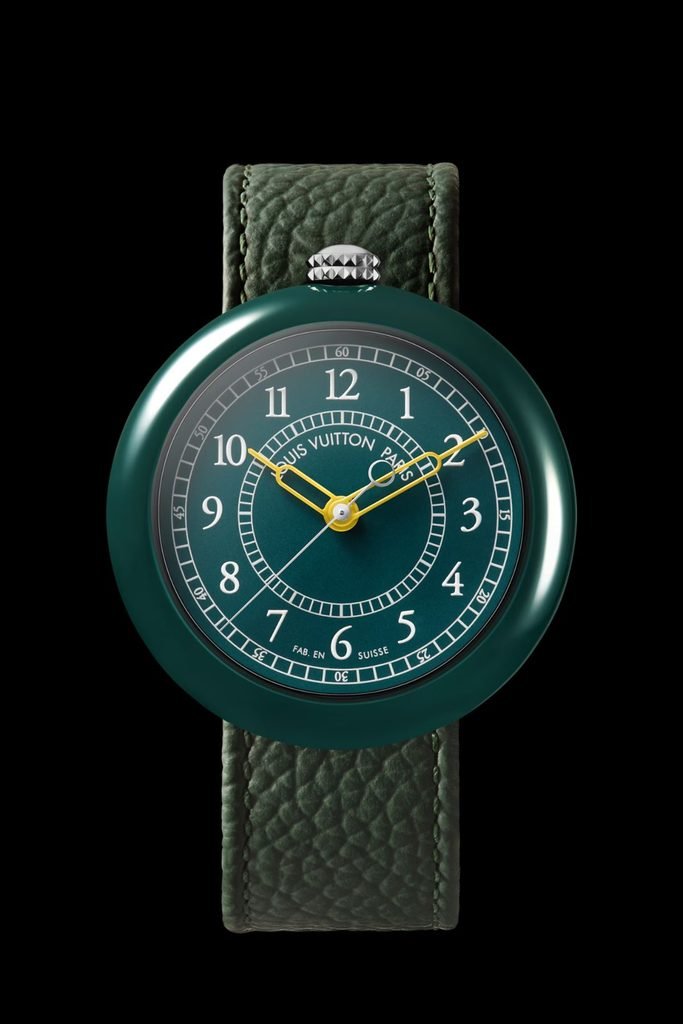
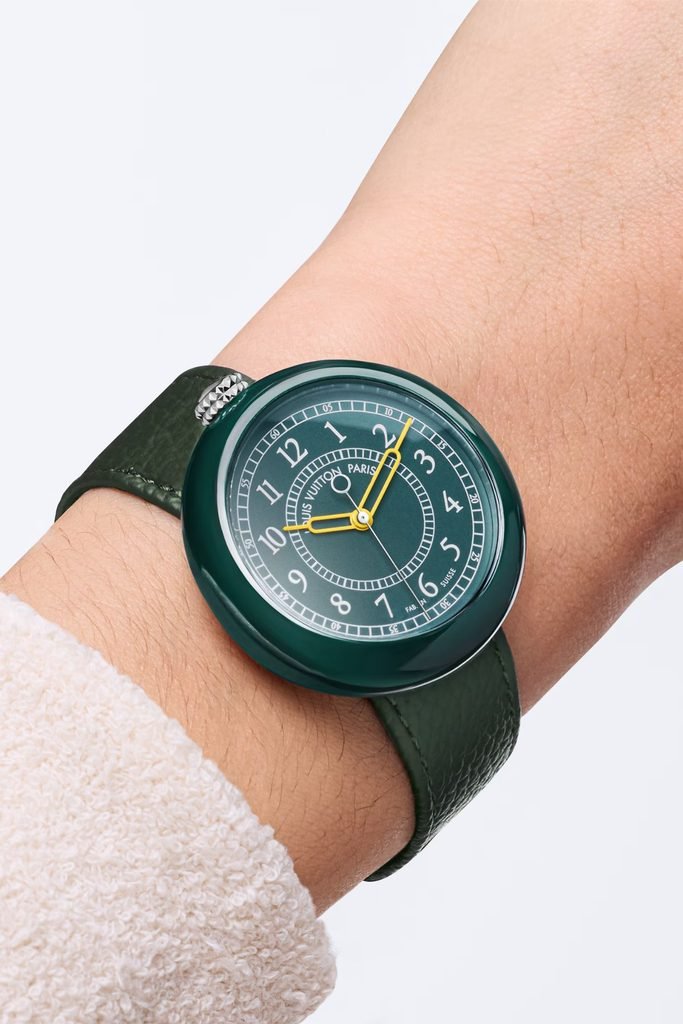
The green version takes a monochromatic approach, pairing its green ceramic case with a matching lacquered dial. Yellow lacquered syringe-style hands provide the principal contrast, while a fine blue seconds hand adds another colour accent.
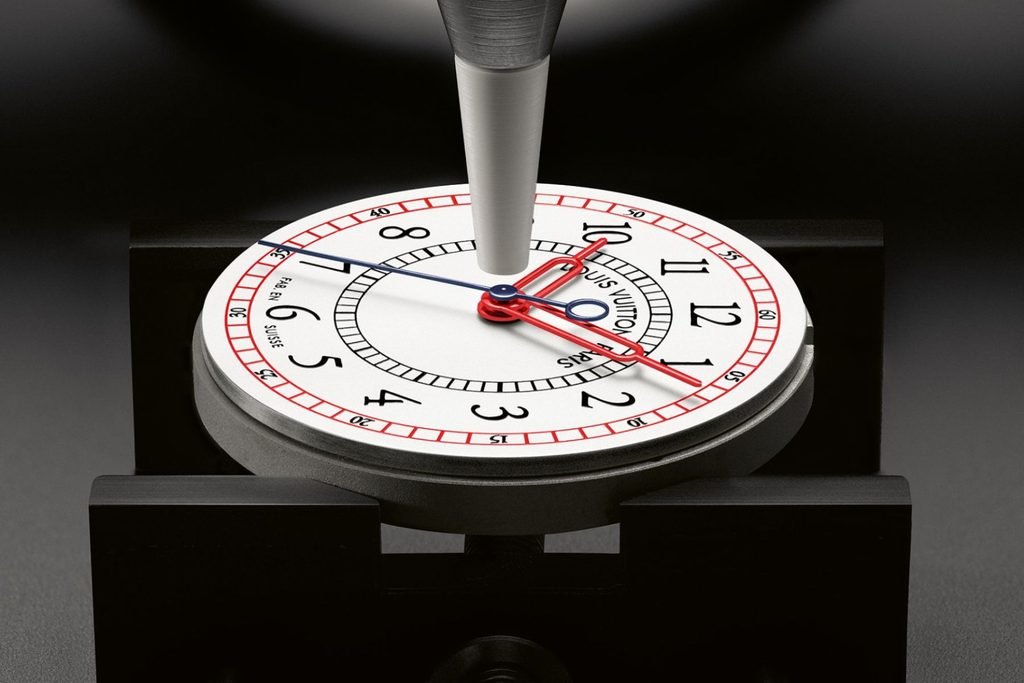
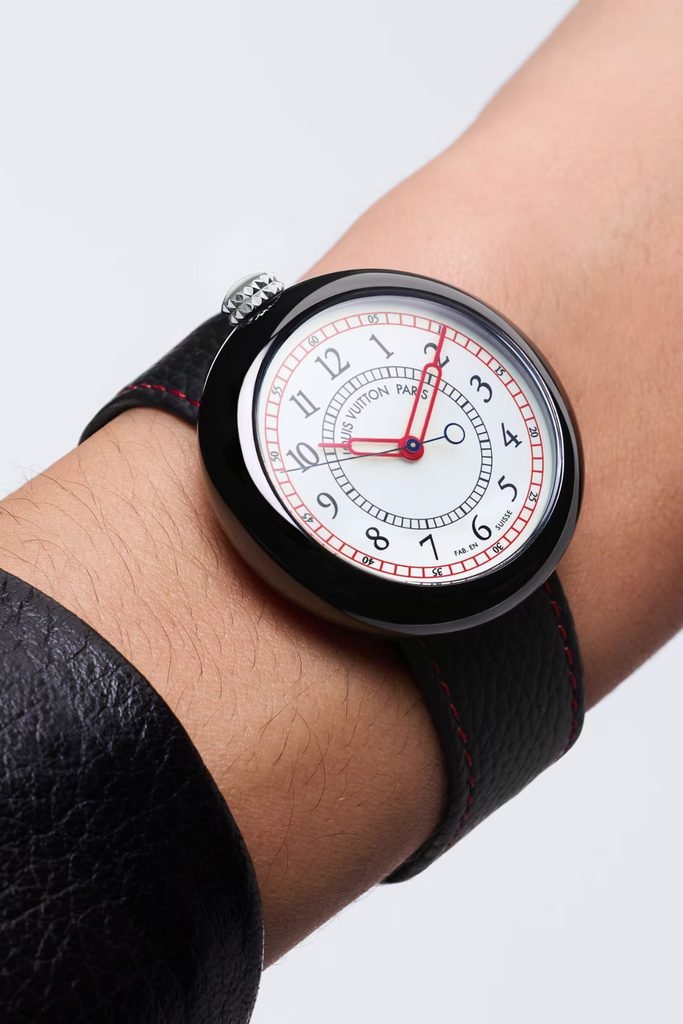
The black version takes the opposite approach, combining a glossy black ceramic case with a white lacquered dial. Red hour and minute hands contrast with the dial, while the seconds hand remains blue.
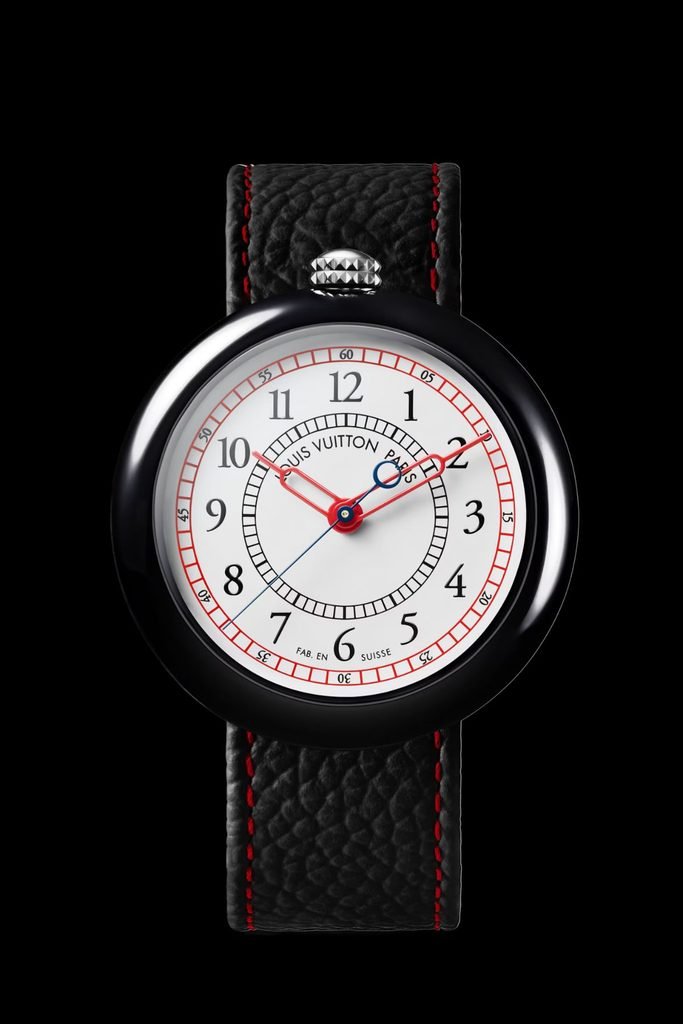
Both versions retain the double railway-style tracks that formed part of the visual identity of the original Monterey. The openworked syringe hands are also carried over into the new model, although the modern watches have been simplified considerably compared with the more complicated LV II.
The alarm and date functions of the original have disappeared. The new Monterey is instead focused entirely on displaying the hours, minutes and seconds, giving the design a cleaner and more contemporary expression.
The dials are finished with lacquer and protected by a matte varnish, creating a contrast with the reflective ceramic cases. It is a combination that allows the two versions to follow the same architecture while developing very different personalities.
Automatic Mechanics From La Fabrique du Temps
Behind the closed caseback is the LFT MA01.02, a self-winding movement conceived and assembled by La Fabrique des Temps Louis Vuitton. The calibre measures 23mm by 5.4mm and contains 174 components, including 26 jewels.
Operating at 28,800 vibrations per hour, or 4Hz, the movement provides a 45-hour power reserve. Its central rotor is made from 18-carat pink gold and features a series of V-shaped notches, while the visible finishing of the movement includes sandblasted bridges, micro-sandblasted edges, perlage on the mainplate and polished bevels.
Although none of this architecture is visible from the wrist, the movement represents a significant departure from the quartz technology of the original LV II. The Monterey retains the visual language of its predecessor while replacing its original mechanism with a contemporary automatic calibre.
The Strap Disappears Into The Case
One of Gae Aulenti’s most distinctive solutions has also survived the transition to the modern Monterey.
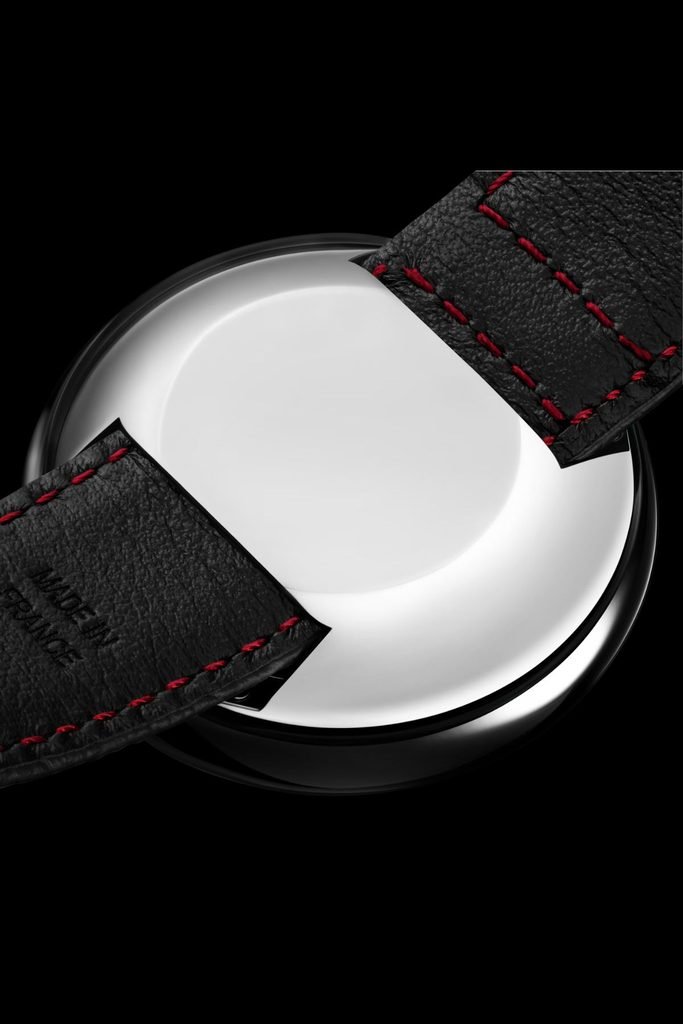
Because the original design avoided traditional lugs, Aulenti developed a strap attachment system integrated into the underside of the case. The strap passes through the caseback rather than attaching to visible lugs, allowing it to disappear beneath the watch and preserving the continuous pebble-like silhouette.
The new Monterey Ceramic uses the same principle, paired with a calfskin strap in either black or green and a steel pin buckle. From above, the result remains remarkably close to the visual logic established in 1988.
A Modern Tribute To The LV II
The new Monterey Ceramic is not simply a reproduction of Louis Vuitton’s first watches. Instead, it takes the defining elements of the 1988 LV II — the compact 37mm dimensions, lug-less pebble case, noon crown and ceramic construction — and translates them into a contemporary automatic watch.
Its permanent place in the collection also distinguishes it from last year’s Monterey in yellow gold, while the black and green ceramic cases establish a much closer visual connection with the original LV II.
Both versions are now part of the permanent Louis Vuitton collection and are priced at EUR 23,000.
Technical Specifications
| Case | 37mm diameter × 11mm thick |
| Case material | Glossy ceramic, black or green |
| Case shape | Lug-less, pebble-shaped |
| Crown | Steel, positioned at 12 o’clock, Clous de Paris texture |
| Crystal | Sapphire with anti-reflective coating |
| Caseback | Closed |
| Water resistance | 30m |
| Dial — Green | Green lacquered dial, yellow hour/minute hands, blue seconds hand, white peripheral railway track |
| Dial — Black | White lacquered dial, red hour/minute hands, blue seconds hand, red peripheral railway-style minutes track |
| Movement | LFT MA01.02 |
| Movement development | Conceived and assembled by La Fabrique du Temps Louis Vuitton |
| Winding | Self-winding |
| Dimensions | 23mm × 5.4mm |
| Components | 174 |
| Jewels | 26 |
| Frequency | 28,800 vph / 4Hz |
| Power reserve | 45 hours |
| Rotor | 18k pink gold |
| Functions | Hours, minutes, seconds |
| Strap | Black or green calfskin |
| Buckle | Steel pin buckle |
| Availability | Permanent collection |
| Price | EUR 23,000 |
For more information, please visit the official Louis Vuitton website.
Explore the releases of 2026.