Cartier Cheich Sets Auction Record at Sotheby’s Hong Kong
A unique white-gold Cartier Cheich linked to the Paris-Dakar Rally sells for HK$26.52 million, becoming the most expensive Cartier wristwatch ever sold at auction.
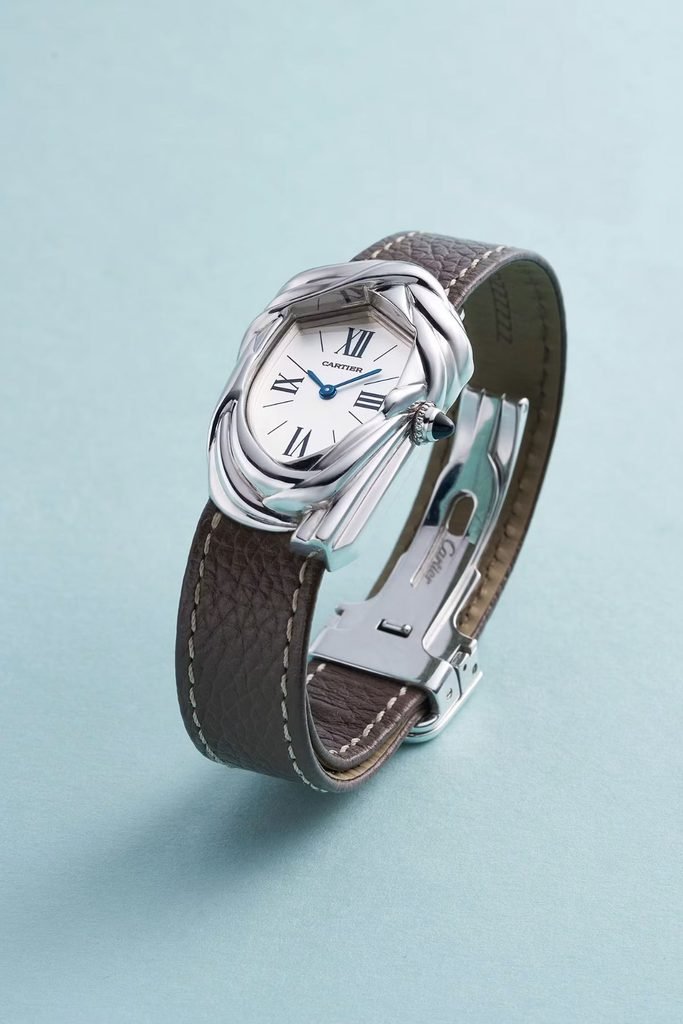
Few Cartier watches carry a story as unusual as the Cheich. Created around the legendary Paris-Dakar Rally and inspired by the blue headscarves worn by the Tuareg people of the Sahara, the design was never intended to become a conventional commercial model. Instead, it was conceived as a trophy for an achievement that only one competitor ever managed to accomplish.
Now, more than four decades after the Cartier Challenge was introduced, a unique white-gold Cheich commissioned by Cartier for collector Giorgio Seragnoli has made auction history. Offered by Sotheby’s in Hong Kong, the circa-2010 watch sold for HK$26,520,000, including fees, equivalent to approximately US$3.41 million. The result makes it the most expensive Cartier wristwatch sold at auction, surpassing the roughly US$2 million achieved by a Cartier Crash at Christie’s Geneva earlier in 2026.
Born From the Paris-Dakar
The story of the Cheich begins with one of the most demanding motorsport events ever created. Founded in 1978 by French motorcycle racer Thierry Sabine, the Paris-Dakar Rally quickly became synonymous with endurance, navigation and mechanical survival. The original event began in Paris and crossed thousands of kilometres of difficult terrain before reaching Dakar, Senegal.
Cartier became involved with the rally during its formative years, attracted by the combination of adventure, endurance and exploration that defined the event. Among its initiatives was the Cartier Challenge, introduced in 1983 by Cartier and its then-president Alain-Dominique Perrin.
The concept was remarkably simple but extraordinarily demanding: a competitor who won the same category of the Paris-Dakar in consecutive years would receive a Cartier watch instead of a conventional sporting trophy.
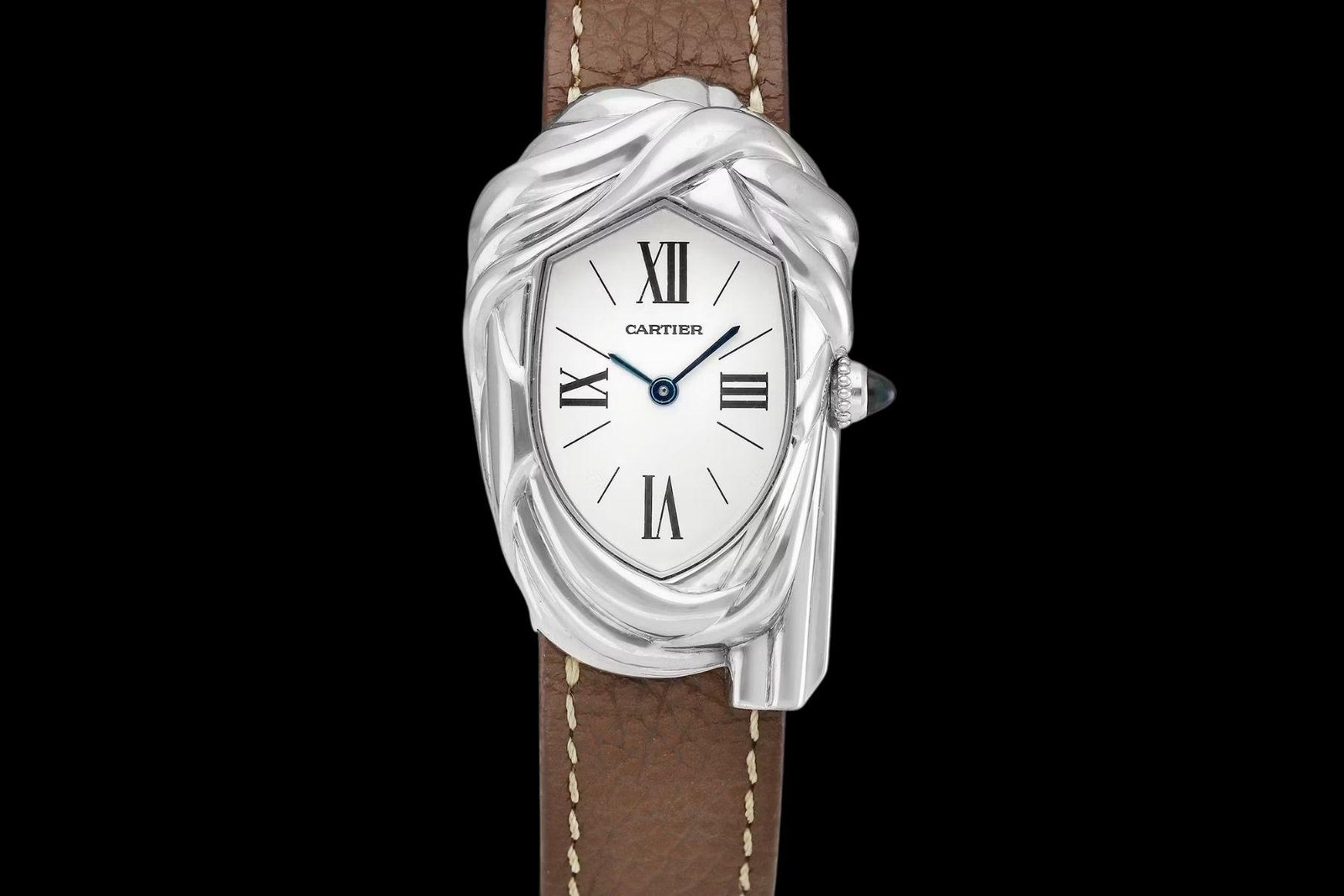
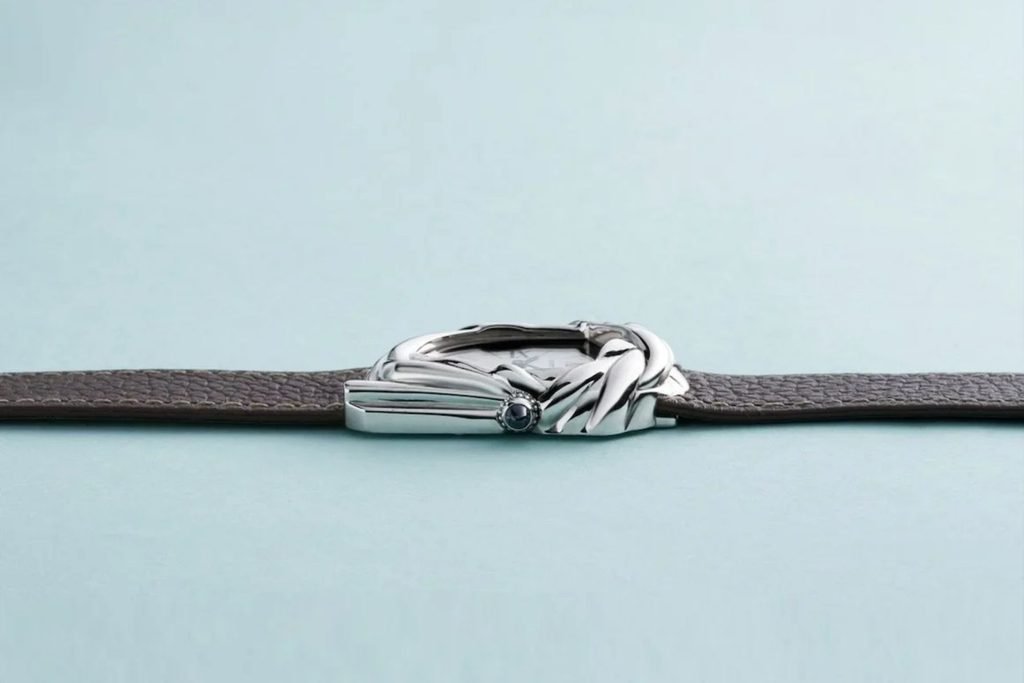
The design needed to reflect the environment in which the achievement took place. Cartier therefore looked towards the Tuareg people of the Sahara, whose traditional blue headscarves are known in French as cheich. The distinctive shape of the fabric became the inspiration for one of the most unusual watch cases ever produced by Cartier.
Gaston Rahier: The Only Winner
It did not take long for the Cartier Challenge to find its first, and ultimately only, winner.
Belgian motocross champion Gaston Rahier won the motorcycle category of the Paris-Dakar Rally in both 1984 and 1985. By doing so, he became the sole recipient of the Cartier Challenge Trophy and the only competitor ever to officially win the Cheich as a sporting prize.
The timing proved significant. In 1986, Thierry Sabine died in a helicopter accident during the Paris-Dakar, and the Cartier Challenge disappeared with him. What had been conceived as an annual trophy therefore became a short-lived chapter in Cartier’s history.
According to Sotheby’s, four examples of the original Cheich were produced during this period. Two were created in 1983, one intended for a man and another for a woman. A further example was made for Sabine, although its current whereabouts remain unknown. The fourth was created for a future winner but was never awarded.
Rahier’s own trophy was eventually sold by Sotheby’s in 2022 after being offered by his family, achieving more than one million euros. Two other original examples remain in Cartier’s archive collection, while the Sabine watch remains unaccounted for.
A Fifth Cheich
For decades, the story appeared to have ended with those original examples. Then Cartier made something that had never existed before.
Giorgio Seragnoli, co-author of the influential Cartier Bianco book and owner of a significant collection of white-metal Cartier watches, wanted to add the ultimate Cheich to his collection. Cartier agreed to create a completely new interpretation specifically for him.
The result appeared in 2010 as a unique white-gold Cheich, numbered No. 1 of 1.
Unlike the original trophy watches, this example was not produced for the Paris-Dakar or intended to be awarded to a racing champion. It was a special commission created for one collector, giving the legendary Cheich form an entirely new chapter while retaining its connection to the history of the Cartier Challenge.
That distinction is central to understanding the watch that Sotheby’s offered in 2026. It is not one of the original four watches made for the Cartier Challenge, but a fifth and unique example created decades later, directly inspired by that extremely rare family of watches.
The 2010 Unique White-Gold Example
The watch offered in Hong Kong is remarkably simple mechanically compared with many modern high-complication Cartier creations. Its significance comes instead from its provenance, design and extraordinary rarity.
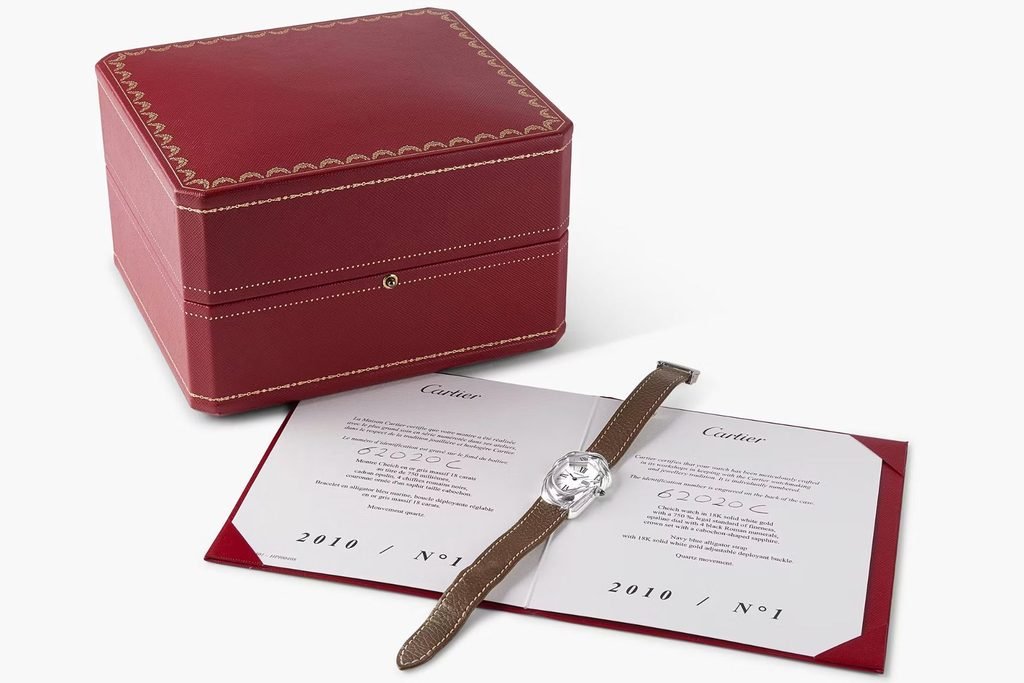
The case is made from 18-karat white gold and measures approximately 38 mm in length by 27 mm in width. Its white dial carries the Cartier signature, while the caseback is secured by four screws. Inside is a jewelled quartz calibre, a detail that makes the watch particularly unusual when considered alongside its extraordinary auction value.
The watch is fitted with a brown Cartier leather strap and an 18-karat white-gold folding clasp. It was accompanied by its Cartier certificate and presentation box when offered by Sotheby’s.
The unusual silhouette remains the defining feature. Rather than following Cartier’s better-known Tank, Santos or Crash language, the Cheich translates a piece of desert clothing into a watch case, producing an elongated and sculptural profile unlike almost anything else in the Maison’s history.

Nine Minutes That Changed the Record
The Cheich entered Sotheby’s Important Watches sale in Hong Kong with an estimate of HK$8 million to HK$40 million. It ultimately became one of the headline results of the auction.
According to Sotheby’s reporting cited by Hodinkee, the bidding lasted approximately nine minutes and involved online, telephone and in-person bidders. The final price reached HK$26,520,000 including fees, or approximately US$3.413 million.
The result pushed the Cheich beyond the previous benchmark for a Cartier wristwatch at auction. That distinction had belonged to a Cartier Crash that achieved approximately US$2 million at Christie’s Geneva in May 2026.
What makes the result particularly striking is that the Cheich is not powered by an elaborate mechanical complication. Its value is instead concentrated in something considerably harder to reproduce: historical context, extreme rarity, a unique commission and a direct connection to one of the most legendary endurance races in motorsport.
More Than a Record Price
The Cheich’s auction result is therefore about more than another high-value watch changing hands. It demonstrates how Cartier’s historical designs can acquire a significance that extends well beyond conventional watchmaking specifications.
The original Cheich was born from an unusual partnership between a luxury Maison and an extraordinary motorsport event. Its design transformed the visual identity of the Sahara into a wristwatch, while the Cartier Challenge gave it a purpose that few watches have ever had: it was something to be earned rather than bought.
The 2010 white-gold example took that mythology and turned it into a unique collector’s commission. Sixteen years later, its appearance at Sotheby’s gave the Cheich a new place in auction history.
At HK$26.52 million, the unique Cartier Cheich is now not only one of the rarest shapes in Cartier’s history, but also the Maison’s most expensive wristwatch ever sold at auction.
Technical Specifications
| Model | Cartier Cheich |
| Year | Circa 2010 |
| Edition | Unique piece, No. 1 of 1 |
| Case | 18k white gold |
| Case Size | 38 mm length × 27 mm width |
| Caseback | Secured by 4 screws |
| Dial | White |
| Movement | Quartz, jewelled |
| Strap | Brown Cartier leather |
| Clasp | 18k white-gold Cartier folding clasp |
| Case Numbers | No. 1, 3316AF and 62020C |
| Signatures | Case, dial and movement signed Cartier |
| Accessories | Cartier Certificate and presentation box |
| Auction House | Sotheby’s |
| Auction | Important Watches, Hong Kong, September 2026 |
| Estimate | HK$8,000,000–40,000,000 |
| Auction Result | HK$26,520,000 including fees |
| Approx. USD Result | US$3.41 million |
| Historical Result | Most expensive Cartier wristwatch sold at auction at the time of the sale |
For more information, please visit the official Sotheby’s website.
Explore the releases of 2026.