Patek Philippe Rare Handcrafts: 7 Table Clocks Inspired By Italy
Seven exceptional table clocks transform Italian cities, landscapes and decorative traditions into miniature works of art.
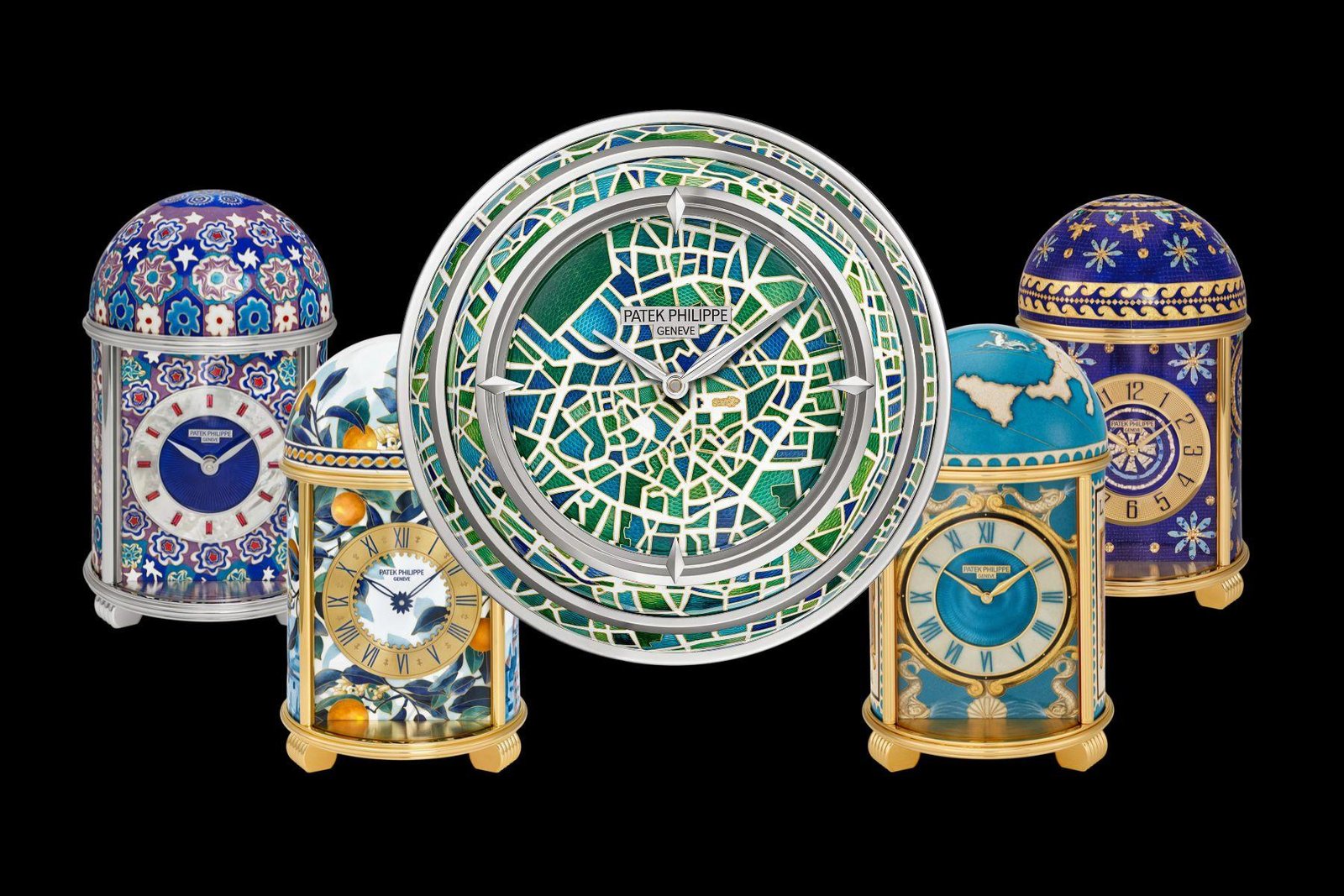
The Patek Philippe Rare Handcrafts collection extends its interpretation of Italian culture beyond wristwatches and pocket watches with seven exceptional table clocks. Each creation explores a different subject, from the urban landscape of Milan and the glassmaking traditions of Murano to the architecture of Ravenna, the streets of Rome and the landscapes of Sicily. Across the collection, Patek Philippe combines centuries-old decorative techniques with mechanical timekeeping, creating objects in which the clock itself becomes part of a much larger artistic composition.
The seven pieces also demonstrate the extraordinary variety of techniques employed by the manufacture’s artisans. Cloisonné, paillonné and flinqué enamel appear alongside miniature painting, hand engraving and, in the final creation, the particularly unusual technique of Longwy enamel on faience. Some are produced as small limited series, while others exist as unique pieces, making each clock a highly individual interpretation of Italy.
City of Milan
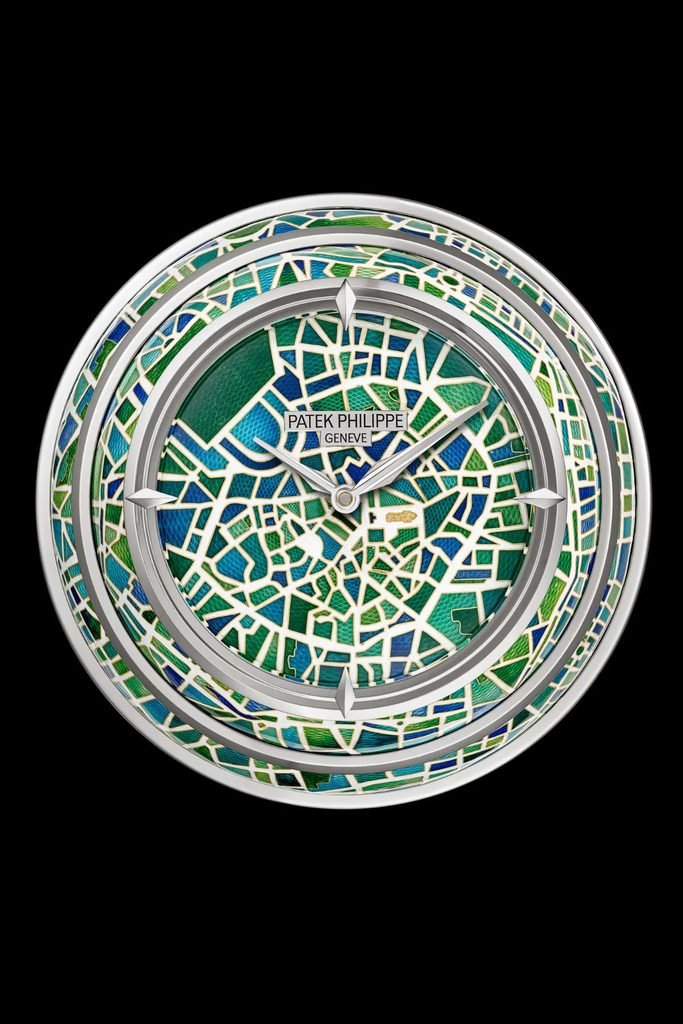
The 25028M-001 City of Milan is a limited series of just three pieces, priced at €263,499 each. Measuring 53.47 mm high and 126 mm wide, the table clock translates the urban landscape of Milan into a composition of cloisonné, paillonné and flinqué enamel.
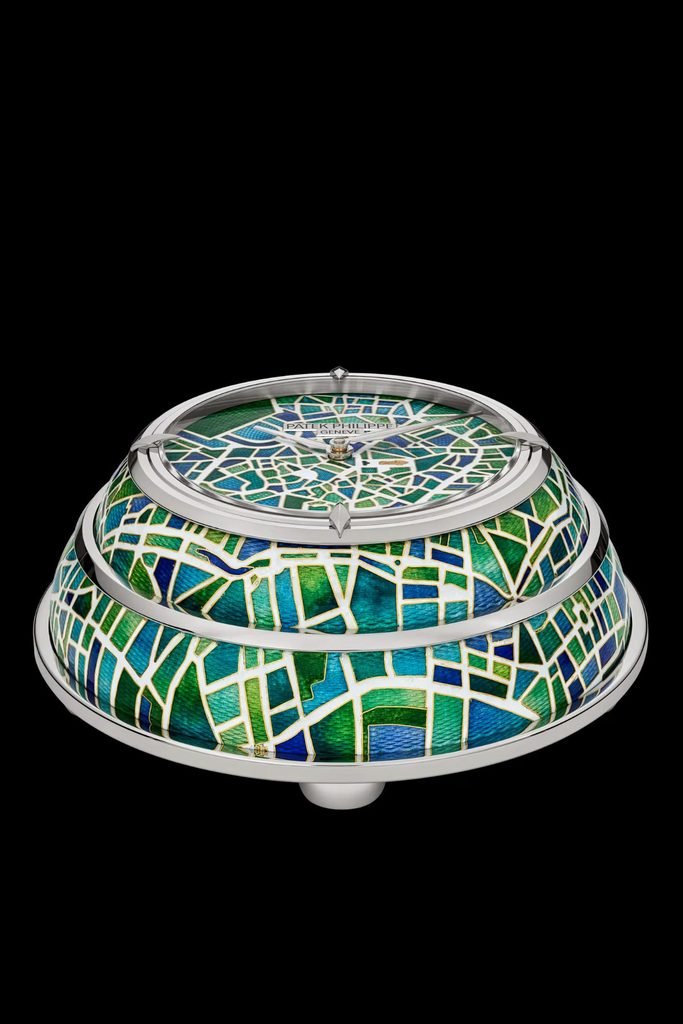
The dial and convex circular side panels feature barleycorn guilloché beneath translucent enamel, giving the surfaces a textured foundation before the coloured decoration is applied. Approximately 11 metres of gold wire, weighing around 21.3 grams, are used for the cloisonné work. The palette comprises 20 enamel colours, including 19 translucent shades and an opaque white used to distinguish the principal roads of the city.
Milan is represented in shades of blue, green and turquoise, while the Duomo is rendered in Grand Feu cloisonné and enriched with gold paillonné decoration. The enamel work requires eight to nine firings at temperatures between 850°C and 900°C. Rhodium-plated trapeze-shaped hands indicate the time, while four lozenge-shaped appliques on the bezel mark the quarter-hours and cardinal points.
The clock is powered by the manually wound 17”’ PEND TABLE movement, which is rewound by an electric motor. The calibre measures 38.65 mm in diameter and 3.7 mm thick, with 210 components, 21 jewels, a frequency of 2.5 Hz, a Breguet balance spring and the Patek Philippe Seal.
Millefiori
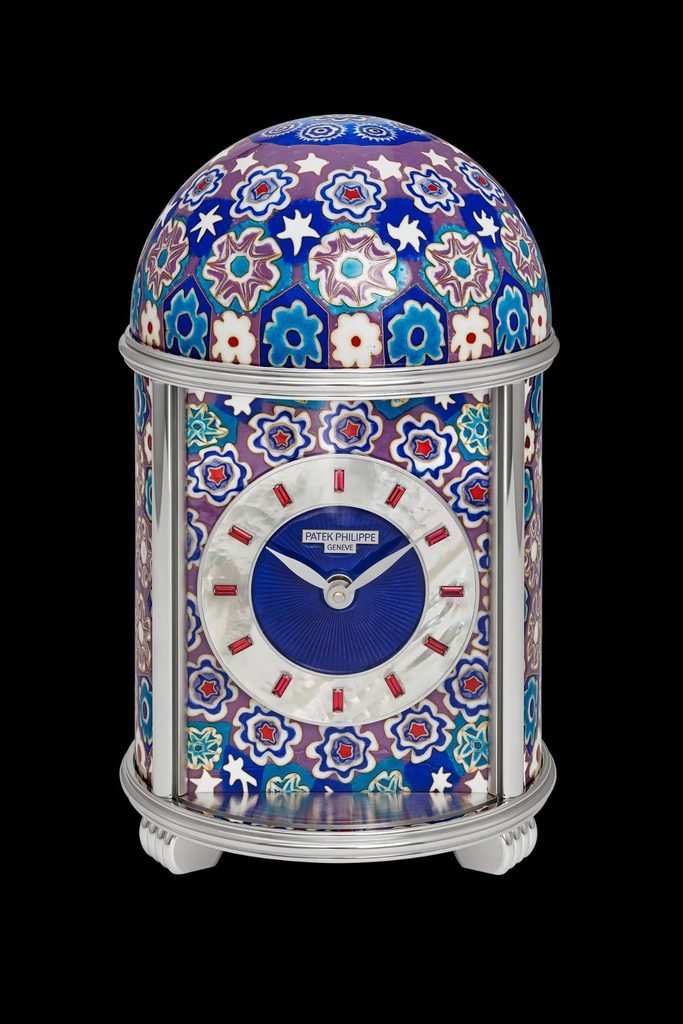
The 10039M-001 Millefiori is a small dome table clock produced as a limited series of five pieces, with each one priced at €215,590. Its decoration takes inspiration from the ancient millefiori glassmaking technique associated with Murano artisans, translating the colourful character of the material into Grand Feu cloisonné enamel enriched with miniature painting.
Approximately 14.5 metres of gold wire, weighing around 27.5 grams, are used to create the cloisonné structure. The decoration incorporates 10 enamel colours together with two colours dedicated to miniature painting. Each plate requires 10 firings at approximately 770°C, allowing the different layers of colour and detail to develop progressively.
The hour circle is made from white mother-of-pearl and is framed by 12 baguette-cut dark orange sapphire hour markers, totalling 1.92 carats. Rhodium-plated leaf-shaped hands sit above a sunburst centre rendered through translucent blue enamel. The clock measures 152.35 mm in height and 92.6 mm in width.
Power comes from the manually wound 17”’ PEND DOME movement, rewound by an electric motor. The movement measures 38.65 mm in diameter and 3.7 mm thick, containing 214 components and 21 jewels. It operates at 2.5 Hz and features a Breguet balance spring and the Patek Philippe Seal.
Sicilian Oranges
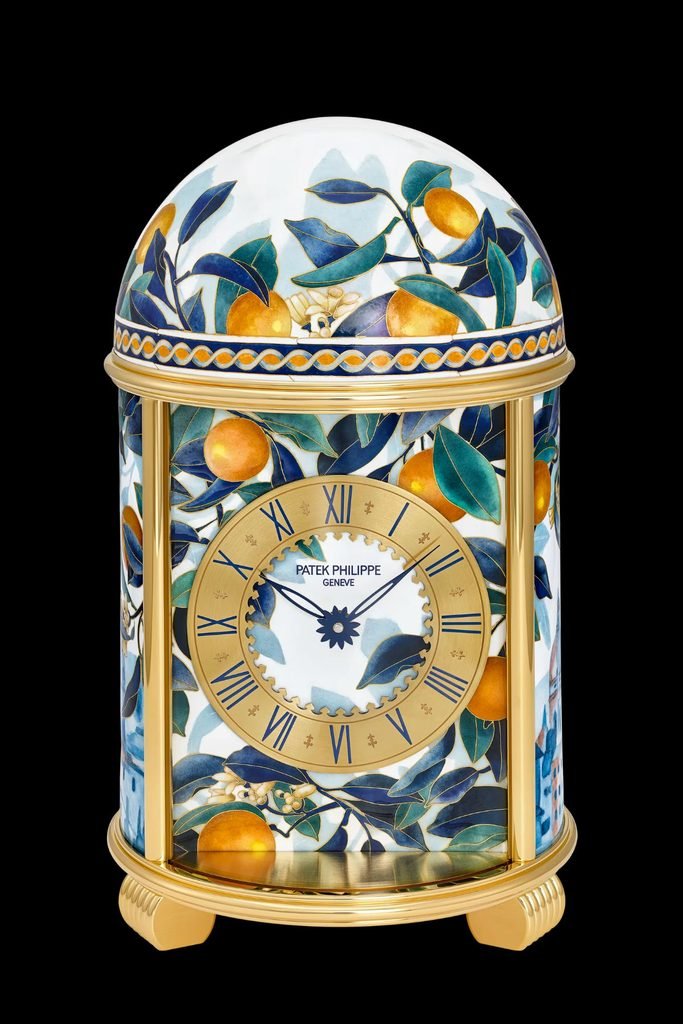
The 20179M-001 Sicilian Oranges is a unique piece priced at €299,431. This dome table clock combines Grand Feu cloisonné enamel with miniature painting to create a distinctly Sicilian landscape.
The composition is divided into two visual planes. Orange trees occupy the foreground, while Palermo appears in the background through miniature painting, creating depth within the relatively small surface of the clock. Approximately 15 metres of gold wire, weighing around 26.8 grams, are used in the cloisonné work, alongside a palette of 49 enamel colours and four to five pastel colours for the miniature painting.
The decoration requires nine to eleven firings at temperatures between 900°C and 910°C. The hour circle takes inspiration from a Sicilian church clock and features blue transfer Roman numerals, while pierced blue-lacquered leaf-shaped hands frame a metallic sun ornament.
Measuring 213.5 mm high and 128 mm wide, the clock houses the manually wound 17”’ PEND DOME movement, rewound by an electric motor. The 38.65 mm by 3.7 mm calibre contains 214 components and 21 jewels and operates at 2.5 Hz with a Breguet balance spring and the Patek Philippe Seal.
Ravenna
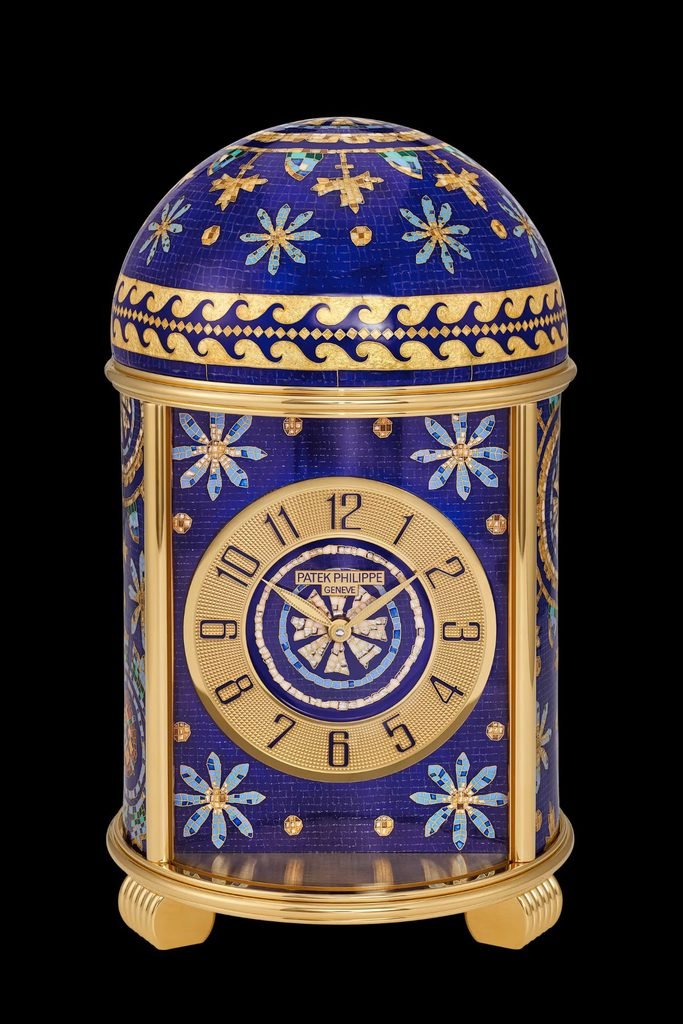
The 20180M-001 Ravenna is another unique piece, priced at €323,385. Its decoration draws directly from the mosaics of the Mausoleum of Galla Placidia in Ravenna, dating from the fifth century and representing the transition between Paleochristian and Byzantine art.
Patek Philippe combines Grand Feu cloisonné, paillonné enamel and miniature painting to reproduce the visual richness of the historic monument. Approximately 33.4 metres of gold wire, weighing around 84.29 grams, are used to create the cloisonné structure, together with a palette of 20 enamel colours.
Silver leaf placed beneath translucent enamel creates the paillonné effect, while the decoration requires 10 firings at approximately 750°C. The hour circle uses a Clous de Paris pattern with blue-lacquered Arabic numerals and gilt leaf-shaped hands featuring circular graining. A star motif inspired by the mausoleum is recreated using silver paillons.
The dome clock measures 213.5 mm in height and 128 mm in width and is powered by the manually wound 17”’ PEND DOME movement, rewound by an electric motor. The movement contains 214 components and 21 jewels, measures 38.65 mm by 3.7 mm and operates at 2.5 Hz, with a Breguet balance spring and the Patek Philippe Seal.
Italian Stamps
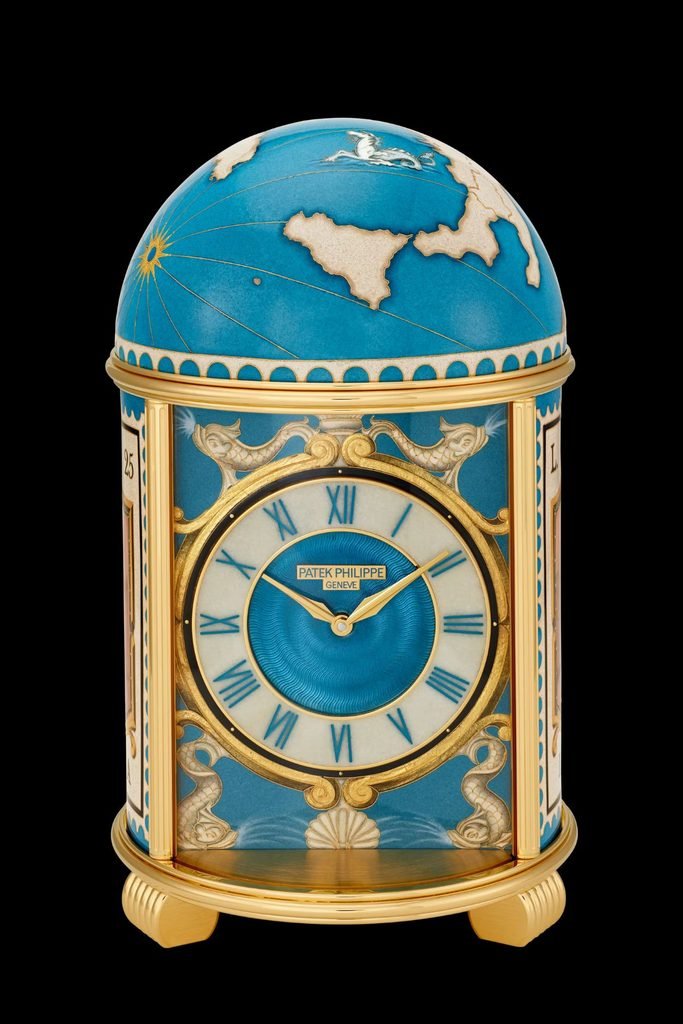
The 20183M-001 Italian Stamps is a unique piece priced at €383,271 and takes its inspiration from historic Italian postage stamps depicting monumental fountains. The decoration also pays tribute to great explorers, bringing together cloisonné, paillonné enamel, miniature painting and hand engraving.
The side panels feature fountains and city names rendered through hand engraving beneath translucent brown enamel. On the dome, postage stamps and a map of Italy are recreated using Grand Feu cloisonné. Around 17.02 metres of gold wire, weighing approximately 31.82 grams, are used in the decoration, alongside 26 enamel colours and three miniature-painting colours.
Gold leaf beneath translucent enamel frames the fountain scenes, while three star-shaped yellow-gold paillons identify three cities. A compass rose is also created using gold leaf beneath translucent enamel and paillonné decoration. The enamel work requires between eight and 13 firings at temperatures ranging from 800°C to 830°C.
The marble hour circle features engraved Roman numerals filled with blue lacquer and gilt trapeze-shaped hands. Wavy sunburst guilloché beneath translucent blue enamel forms the centre, while cloisonné tritons and volutes and Roman-column pillars complete the architectural composition.
Measuring 213.5 mm high and 128 mm wide, the clock is powered by the manually wound 17”’ PEND DOME movement, rewound by an electric motor. The calibre contains 214 components and 21 jewels, operates at 2.5 Hz and features a Breguet balance spring and the Patek Philippe Seal.
Rome by Night
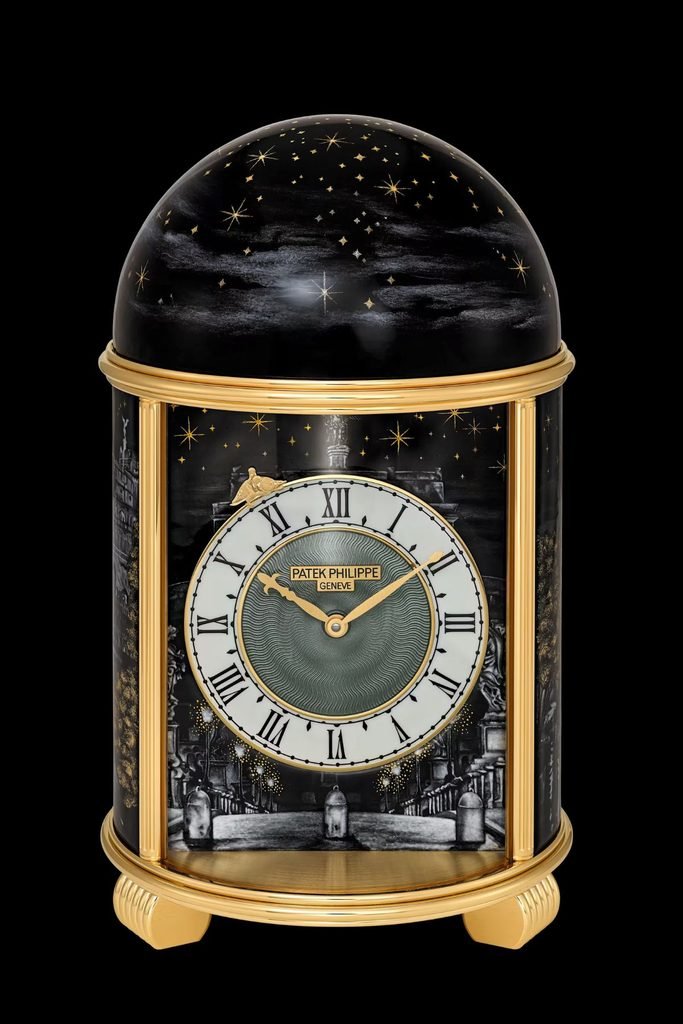
The 20184M-001 Rome by Night is a unique piece priced at €299,431. Instead of cloisonné, its artistic expression is based on grisaille enamel au blanc de Limoges, enriched with gold painting and hand engraving.
The scene depicts Rome at night beneath a field of gold stars. White oil-based enamel is applied with a tiny brush and needle over chestnut-brown translucent enamel to create St Peter’s dome, the bridge leading towards Castel Sant’Angelo and the clouds above the city. Foliage and stars are rendered using white and yellow gold, adding further depth to the composition.
The decoration requires 10 firings at approximately 780°C. Two dove-shaped jewellery appliques, each enriched with hand engraving, add dimensional details, while the white lacquer hour circle, hands and Roman numerals draw inspiration from a city clock.
At the centre, wavy sunburst guilloché beneath translucent grey enamel adds another layer of texture, framed by Roman-column pillars. The clock measures 213.5 mm high and 128 mm wide and is powered by the manually wound 17”’ PEND DOME movement, rewound by an electric motor. Its 38.65 mm by 3.7 mm calibre contains 214 components and 21 jewels and operates at 2.5 Hz.
Sicilian Lemons
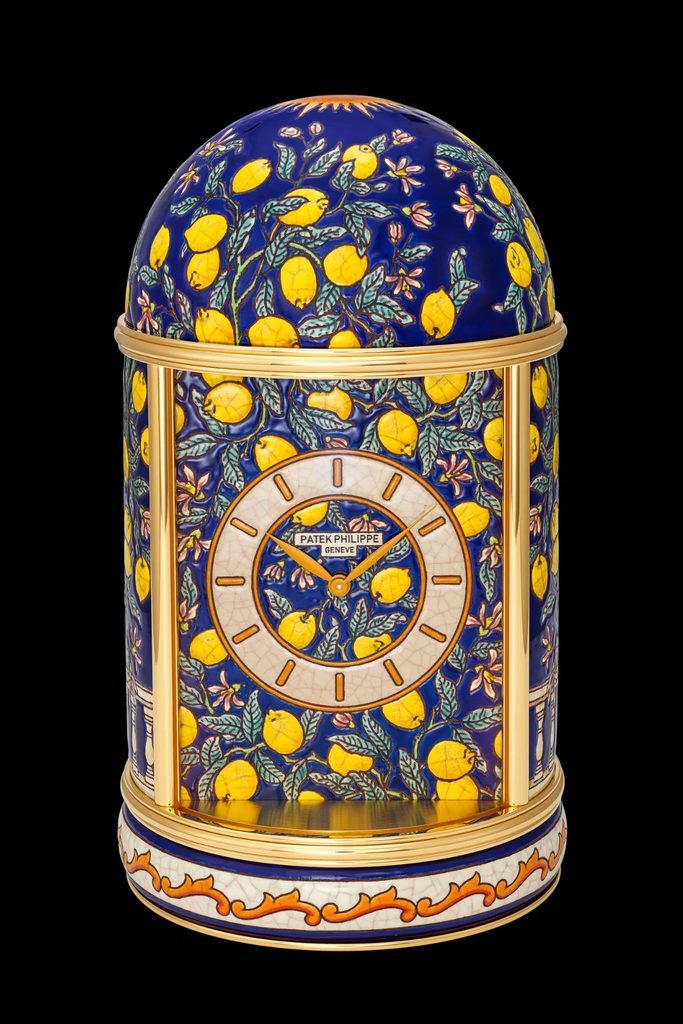
The final creation, the 20185M-001 Sicilian Lemons, is a unique piece priced at €299,431. This dome table clock returns to Sicily, but introduces a particularly unusual decorative technique: Longwy enamel on faience.
Inspired by Sicilian majolica ware, the clock combines brightly coloured citrus motifs with a depiction of Mount Etna reflected in the Mediterranean Sea. The technique takes its name from Longwy in France and begins with the artist laying out the design on the bisque background, drawing the characteristic black outline known as cerne.
The motifs are then filled with a palette of 14 opaque enamel colours, creating a slight relief. Details are subsequently refined with a brush and five highlighting pigments designed to emphasise volume, light and shade. After the successive firings, a colourant is applied to the enamelled surfaces to bring out the fine crackles characteristic of the technique.
Each enamelled plate requires five firings, with temperatures ranging from 1020°C down to 745°C. The finely crackled ivory hour circle features 12 orange enamel baton-shaped hour markers and orange leaf-shaped hands. The circular foot continues the composition with an orange-tinted frieze on an ivory background, creating a crackled Siena earthenware effect.
Measuring 221.2 mm in height and 126 mm in width, the clock is powered by the manually wound 17”’ PEND DOME movement, rewound by an electric motor. The movement measures 38.65 mm in diameter and 3.7 mm thick and contains 219 components and 21 jewels. It operates at 2.5 Hz, uses a Breguet balance spring and carries the Patek Philippe Seal.
Seven Clocks, Seven Interpretations Of Italy
Together, these seven Patek Philippe Rare Handcrafts table clocks demonstrate the extent to which traditional decorative arts can be integrated into mechanical timekeeping. Rather than relying on a single aesthetic language, the collection moves between cloisonné, paillonné and flinqué enamel, miniature painting, hand engraving and the distinctive Longwy enamel on faience technique.
The subjects are equally varied. Milan is represented through its city plan and Duomo, Murano through the Millefiori tradition, Sicily through orange trees, lemons and Mount Etna, Ravenna through its Byzantine-influenced mosaics, Italy’s historic fountains through postage stamps, and Rome through a nocturnal architectural scene.
From the €215,590 Millefiori to the €383,271 Italian Stamps, the seven clocks occupy different levels within the collection, while the three-piece City of Milan and five-piece Millefiori remain the only limited-series creations among the group. The remaining five are unique pieces, making each one a singular interpretation of Italian culture and craftsmanship.
With these creations, Patek Philippe once again places decorative artistry alongside mechanical watchmaking, transforming the traditional table clock into a miniature canvas for architecture, landscape, history and craftsmanship.
For more information, please visit the official Patek Philippe website.
Explore the releases of 2026.