Why Do Watches Show 10:10?
World Watch Day — October 10, 2026
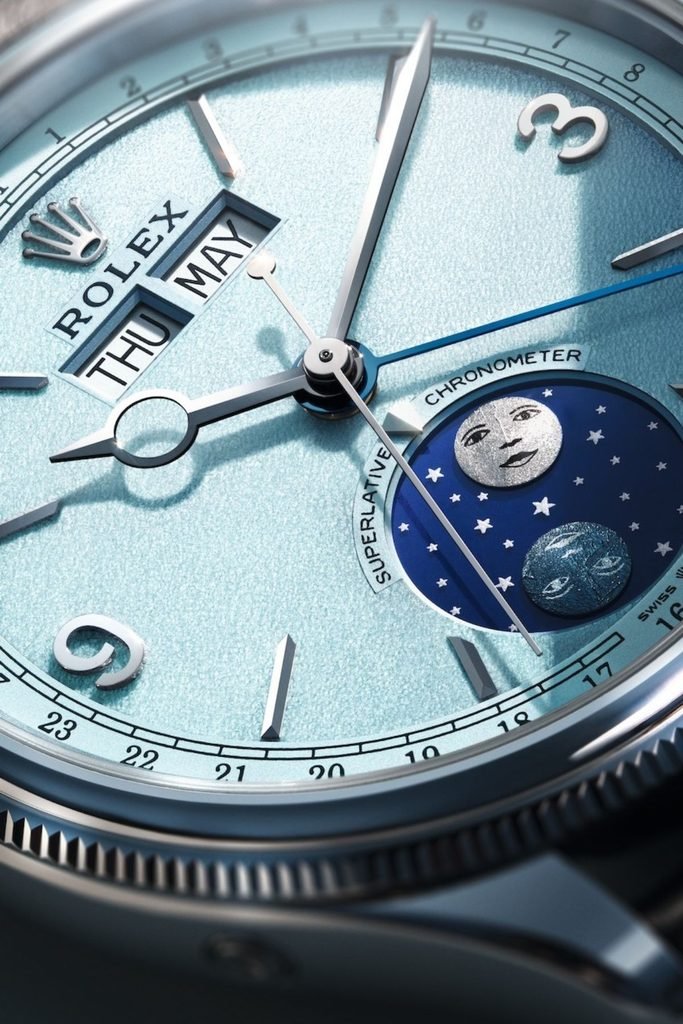
Why do watches show 10:10 in advertisements and product photographs? Open a watch magazine, visit a brand’s website or look through a collection of press photographs, and there is a good chance that the hands will be positioned at approximately 10:10. It is such a familiar sight that many people never stop to question it. After all, a watch can technically be photographed at any time, so why does this particular configuration appear so frequently?
Over decades of advertising and product photography, 10:10 has developed into one of the most recognisable visual conventions in watchmaking. The position creates a balanced composition, keeps the hands apart and generally leaves the brand name at 12 o’clock unobstructed. It also gives the dial an open appearance that allows its design to be appreciated at a glance. What may initially seem like a minor detail is, in fact, a carefully established convention combining visual design, practicality and psychology.
The connection becomes particularly fitting on October 10, the date chosen for World Watch Day. Launched in 2025, this international initiative brings together the global watchmaking community to celebrate its craftsmanship, history and culture. The date deliberately echoes the traditional 10:10 display used in watch advertising. In 2026, the celebration returns for its second edition under the theme “Time as Living Heritage”, highlighting watchmaking as a living culture shaped by craftsmanship, knowledge, creativity and the people who continue to pass it on.
But why did 10:10 become the preferred position, and how did two watch hands pointing towards the upper half of a dial become such an enduring symbol of the industry?

What Is World Watch Day?
World Watch Day is an international celebration dedicated to watchmaking culture, craftsmanship and the transmission of horological knowledge. Officially launched in 2025, the initiative brings together watchmakers, manufactures, museums, schools, cultural institutions, collectors, media and enthusiasts around a shared ambition: to celebrate the cultural, technical, scientific and artistic dimensions of watchmaking and make them accessible to a wider audience.
Following the success of its inaugural edition, which reached more than six million people worldwide according to the organisers, World Watch Day returns on October 10, 2026, with more than 55 events and initiatives taking place internationally. The programme includes exhibitions, talks, workshops, educational projects, museum activities, artistic commissions and digital initiatives, reflecting the many ways in which horological heritage can be preserved, reinterpreted and shared.
The 2026 edition takes place under the theme “Time as Living Heritage”, highlighting the idea that watchmaking is not simply a tradition to be preserved in museums or admired through historical objects. It is a living discipline that continues to evolve through craftsmanship, scientific research, technical innovation and creativity. Equally important is the transmission of knowledge and skills, ensuring that the expertise developed over generations can continue to inspire and shape the future of horology.
The choice of October 10 is a deliberate reference to 10:10, the iconic position in which watch hands are traditionally set for product photography and advertising. To mark the occasion, the organisers invite watch enthusiasts, brands, museums, retailers, media and institutions to share a photograph of a watch on the wrist at 10:10, using #WorldWatchDay. In this way, a familiar convention of watch photography becomes a shared symbol for an international community, connecting people across countries through a common appreciation of timepieces and the culture surrounding them.

Why 10:10?
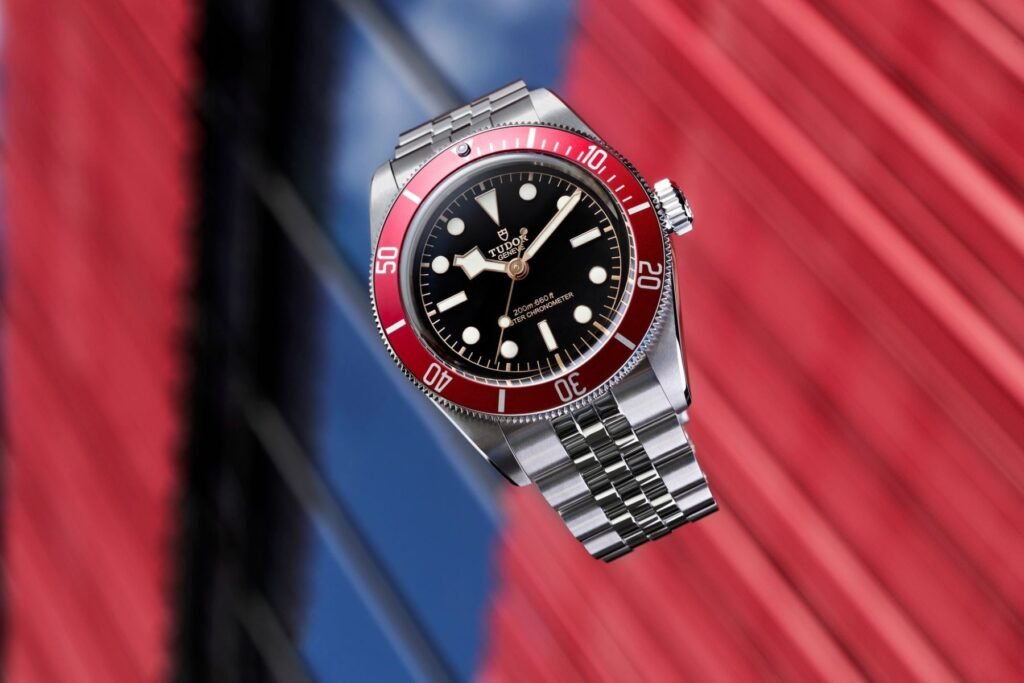
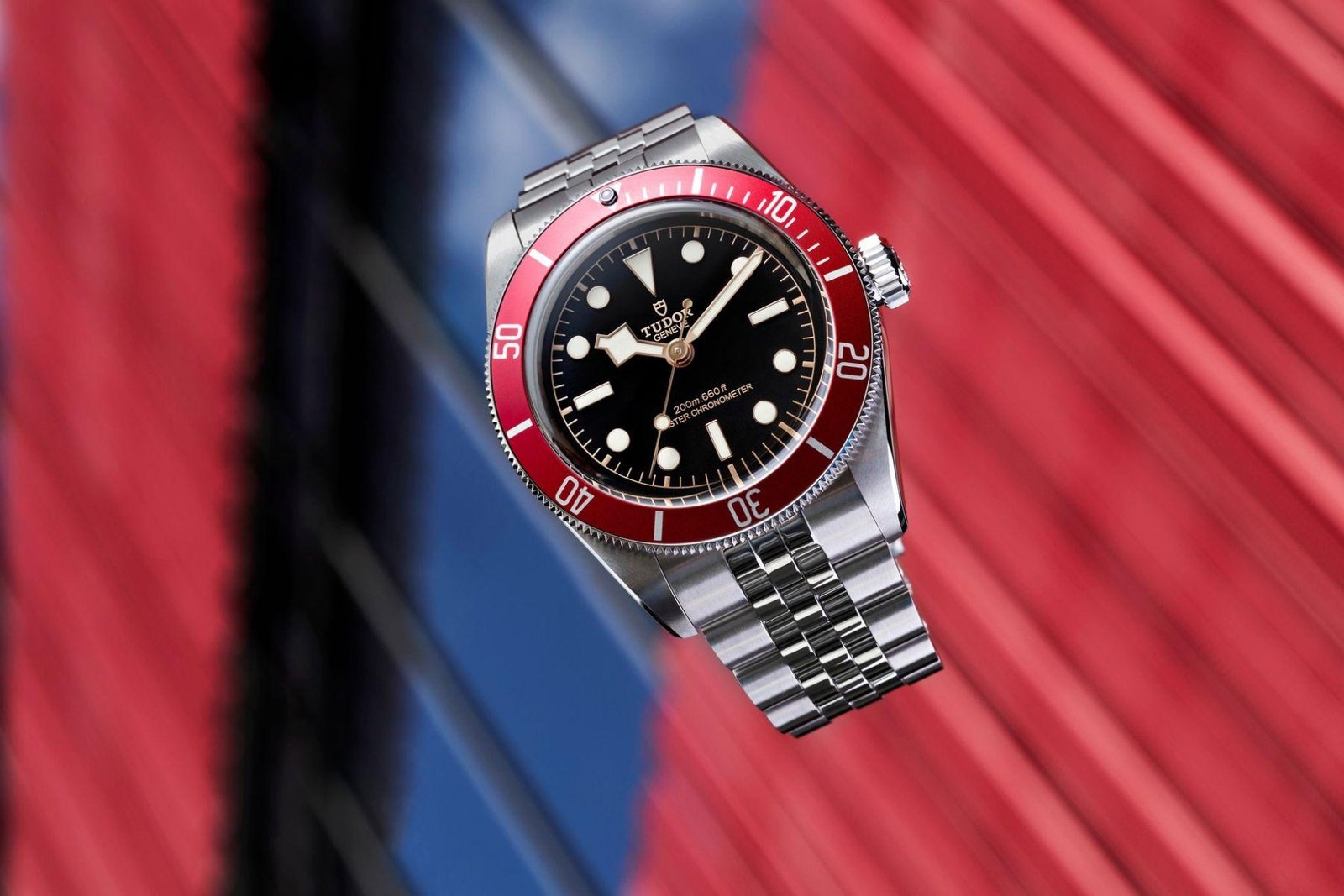
The simplest explanation is also one of the most important: 10:10 creates an effective visual composition. With the hour hand pointing towards ten and the minute hand towards two, the hands spread upwards from the centre of the dial in a relatively symmetrical arrangement. This creates a sense of balance while keeping the two hands sufficiently separated to remain easy to distinguish.
There is also a practical advantage. Many watch brands place their name or logo around the 12 o’clock position, and setting the hands at 10:10 generally leaves this area unobstructed. The hands frame the upper portion of the dial rather than covering the branding, allowing the viewer to appreciate the logo, indices, numerals and overall design together. This is particularly important in product photography, where a single image must communicate the character of a watch quickly and clearly.
Other positions can produce less effective results. At 12:00, for example, the hands would overlap the upper part of the dial and could obscure the brand name. A lower or more asymmetrical arrangement might make the composition feel visually heavier or leave the dial less balanced. Although 10:10 is not the only possible solution, it combines several practical and aesthetic advantages in a configuration that has become familiar to audiences around the world.
The Smile On The Dial
Another explanation for the popularity of 10:10 is the resemblance between the hands and a smiling face. When positioned at ten past ten, the hands form an upward-opening shape that can be interpreted as a smile. By contrast, a configuration such as 8:20 points downwards and can resemble a frown. This association may seem like a simple advertising observation, but researchers have investigated whether the position of watch hands can influence the emotional response of people looking at a watch.
A 2017 study published in Frontiers in Psychology examined watches displayed at 10:10, 8:20 and 11:30. The researchers found that watches presented at 10:10 received higher pleasure ratings than those shown at the other positions tested. Participants also tended to perceive the 10:10 configuration as resembling a smiling face, although they were not necessarily consciously aware of the influence this had on their response.
These findings do not prove that the appearance of a smile alone explains the popularity of 10:10, nor do they mean that this position automatically makes someone want to purchase a watch. Familiarity with the convention may also play a role. Nevertheless, the study provides evidence that the arrangement of the hands can affect how a watch image is perceived, demonstrating how a small design decision can influence the emotional character of a product photograph.
From Different Times to a Familiar Convention
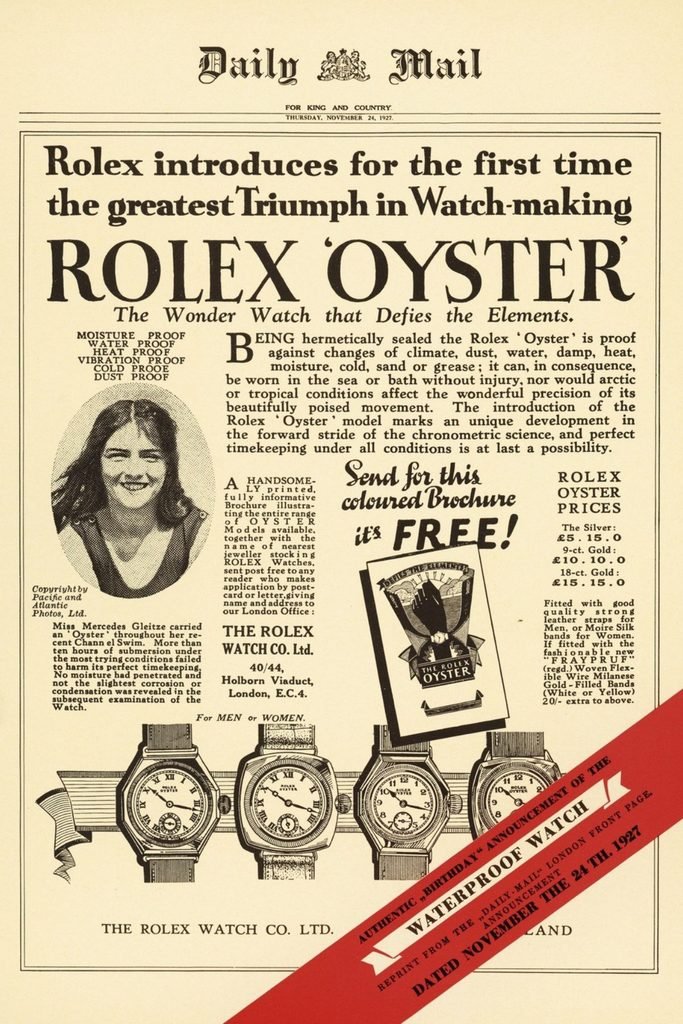
The position of watch hands in advertising has not always followed the same formula. In the 1920s and 1930s, watch advertisements showed a variety of time settings, with 8:20 appearing in some examples. However, it would be inaccurate to describe 8:20 as a universal standard, since other positions were also used.
A 1927 advertisement for the Rolex Oyster, published in the Daily Mail in connection with Mercedes Gleitze’s English Channel swim, provides a particularly interesting example. The advertisement features several watches displaying different times, illustrating how product photography was less standardised than it is today.
The 10:10 arrangement was already used in some advertisements before the middle of the twentieth century, but it became increasingly common from the 1950s onwards. Rather than the result of a single decision or a clearly documented changeover, its rise appears to have been a gradual process as watch advertising developed more consistent visual conventions.
Today, 10:10 is widely recognised as the conventional position for watch photography. Its balanced appearance, the separation of the hands and the space it leaves around the upper part of the dial all contribute to its continued popularity.
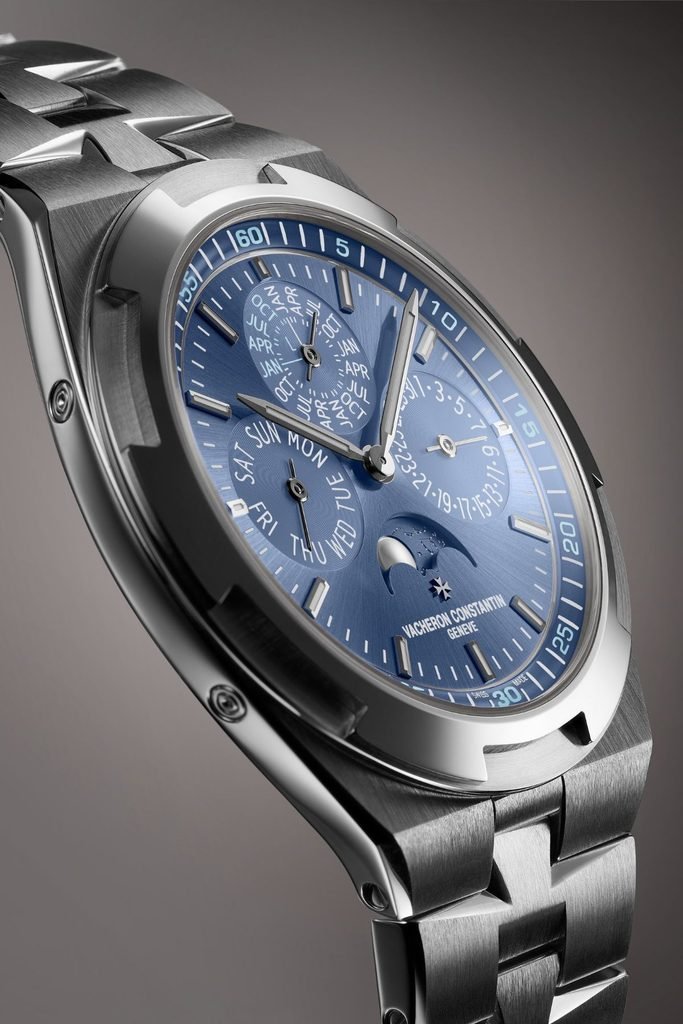
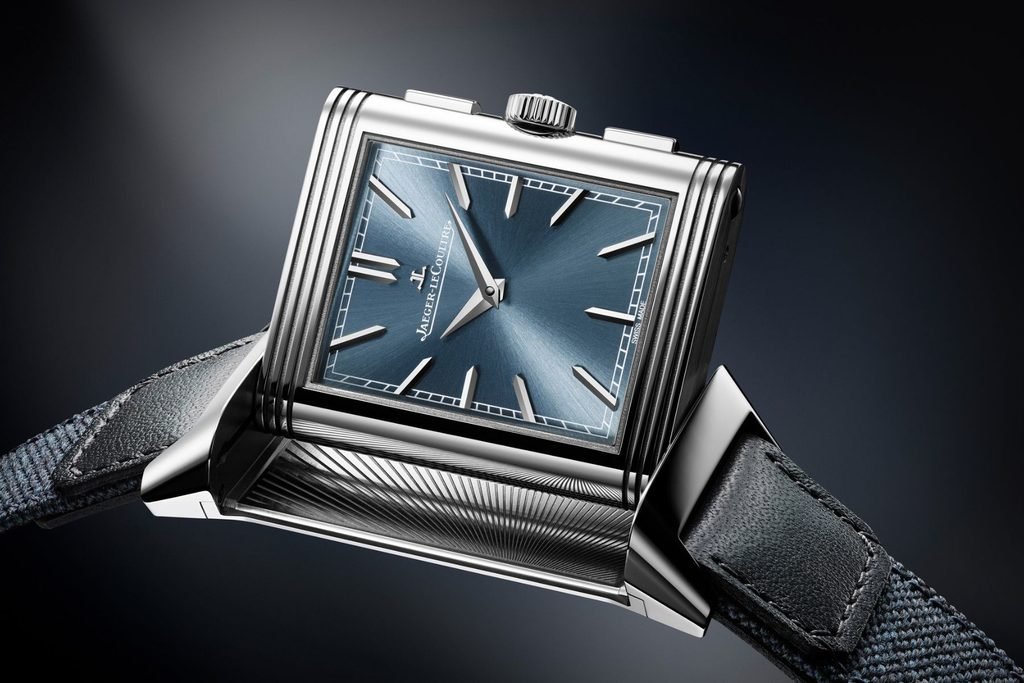
Even today, not every watch is photographed at exactly 10:10. Depending on the dial design, the position of the logo, the presence of a date window or the arrangement of complications and sub-dials, a slightly different time may create a more balanced composition. Some product photographs use positions such as 10:08 or 10:09. The objective remains the same: to present the watch clearly while keeping its most important design elements visible.
The Perfect Watch Photograph
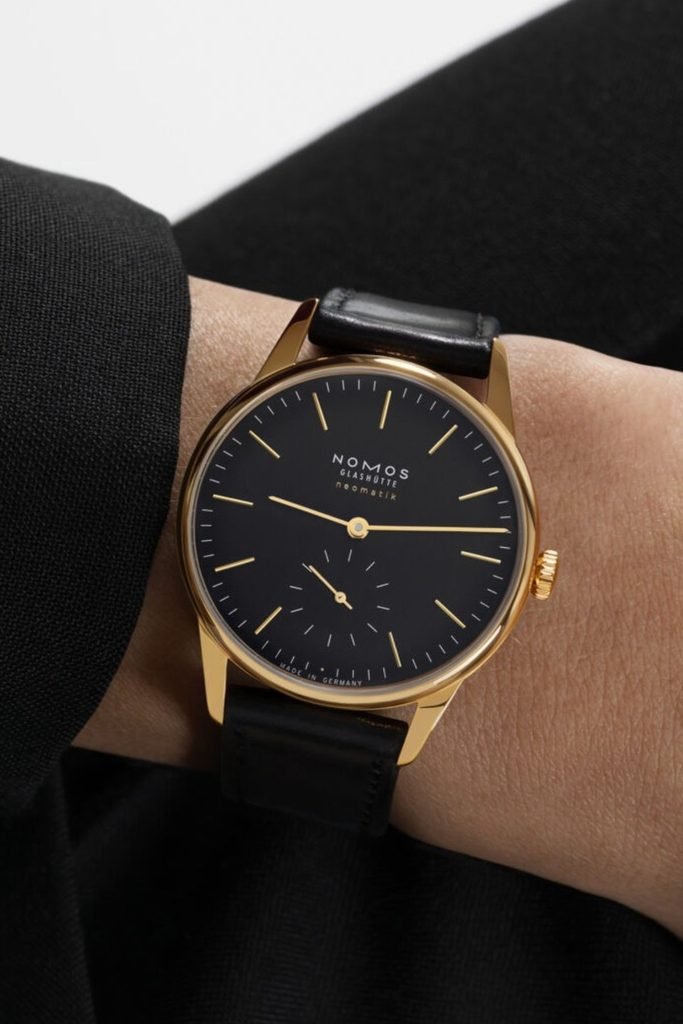
Understanding 10:10 also means understanding the principles of watch photography. A watch dial is a compact but remarkably detailed piece of design. Even a simple three-hand model can combine a logo, applied indices, numerals, a minute track, a date window and several different finishing techniques. A chronograph introduces additional sub-dials and scales, creating an even greater amount of visual information within a limited space.
The position of the hands is therefore an important part of the composition. At 10:10, they naturally direct the eye towards the upper half of the dial without completely covering it. The brand name remains visible, the centre of the dial stays relatively open and the hands help frame the design instead of competing with it. This allows the photograph to communicate the character of the watch while maintaining a clear visual hierarchy.
For advertising and press photography, this is especially valuable. The image must attract attention while allowing the viewer to recognise the brand and appreciate the design almost immediately. Before anyone reads the specifications or examines the movement, the first impression comes from the watch’s proportions, finishing and overall appearance. The position of the hands can reinforce that impression, making 10:10 an effective choice for presenting a timepiece in its most recognisable form.
More Than a Marketing Convention
After decades of advertisements, catalogues, press photographs and product pages, 10:10 has become part of the visual language of watchmaking. It is no longer simply a practical arrangement chosen by photographers; it is a familiar visual cue that tells the viewer to focus on the watch as an object of design and craftsmanship rather than as a record of everyday timekeeping.
Its continued popularity comes from a combination of factors. The position is practical, visually balanced and associated with a positive emotional response in psychological research. Repetition has also helped establish it as the expected way to present a watch. The more frequently people encounter the same configuration in advertising, the more recognisable it becomes, reinforcing the convention across brands and generations.
There is something particularly appropriate about this small detail representing an industry built on precision and craftsmanship. Watchmaking contains countless elements that are easy to overlook, from the finishing of a movement component to the geometry of an escapement or the shape of a hand. The familiar 10:10 display is another example of how a seemingly minor design choice can become an important part of the way an entire industry presents itself to the world.
10/10 — A Day for Watchmaking
World Watch Day offers an opportunity to look beyond individual watches and celebrate the wider culture that surrounds them. From traditional craftsmanship and historical collections to contemporary design, technical innovation and education, watchmaking brings together disciplines and generations through a shared fascination with the measurement and passage of time.
The theme of the 2026 edition, “Time as Living Heritage,” captures this idea particularly well. A watch may contain techniques developed over centuries, but the heritage behind it remains alive through the people who design, manufacture, study, collect and wear these timepieces. Preserving watchmaking therefore means more than protecting historical objects; it also means ensuring that the knowledge and skills behind them continue to be practised, developed and passed on.
On October 10, the international watch community is invited to celebrate this shared heritage, including through the simple gesture of sharing a wrist shot at 10:10. It is a fitting reminder that a convention born out of product photography has become a recognisable symbol of watchmaking culture and a connection between enthusiasts around the world.
The next time you see a watch displayed at 10:10, look beyond the familiar arrangement of its hands. Their position reflects decades of visual tradition, practical design considerations and research into the way people respond to images. What appears to be a simple setting is also a small part of the story of how watches are designed, presented and appreciated.
10:10 is more than a time. It has become one of the most recognisable visual signatures of watchmaking. And on October 10, that signature gets its own day.
Happy World Watch Day.
October 10, 2026 — #WorldWatchDay
For more information, please visit www.worldwatchday.org.
Explore watch releases of 2026.